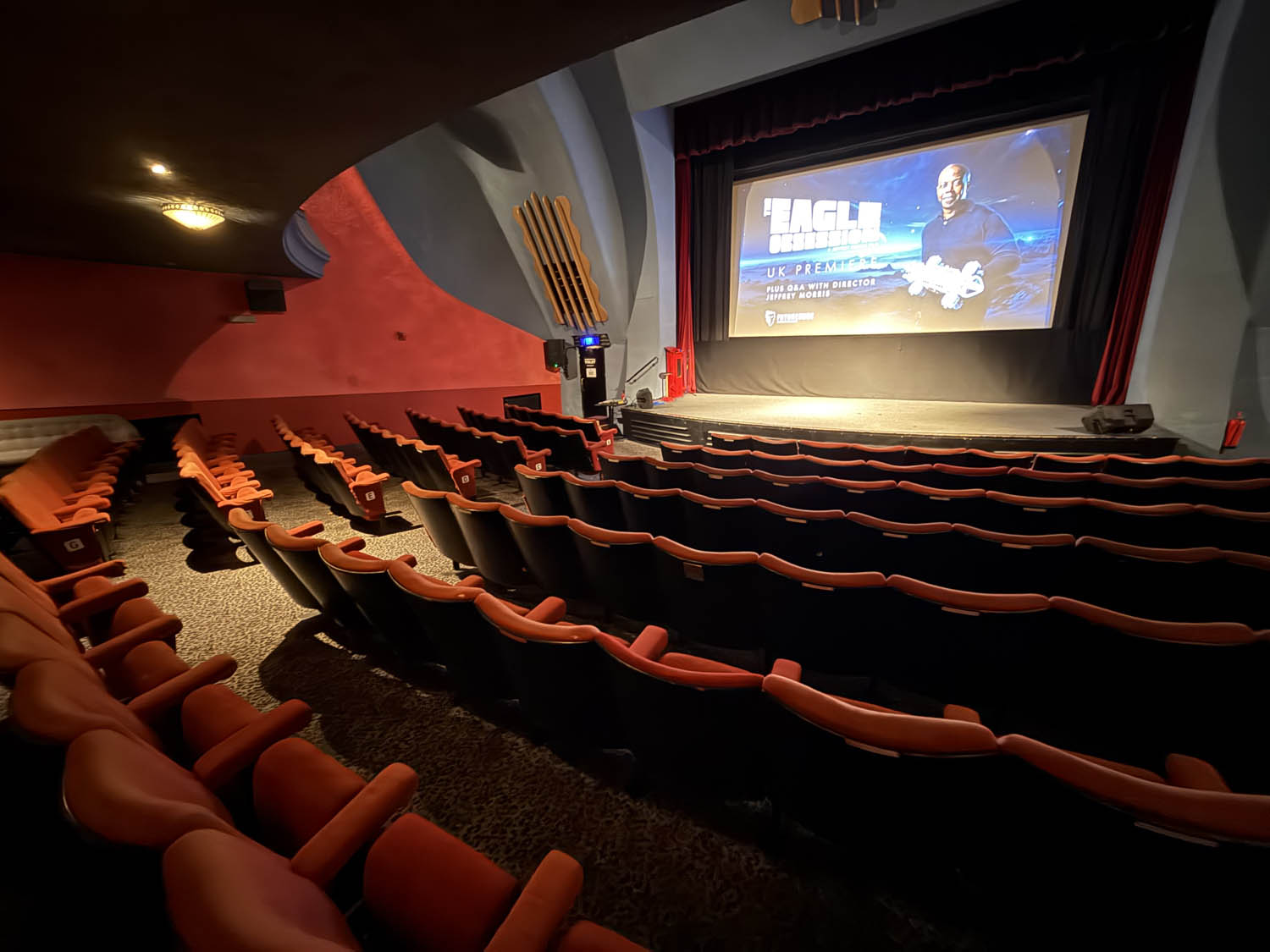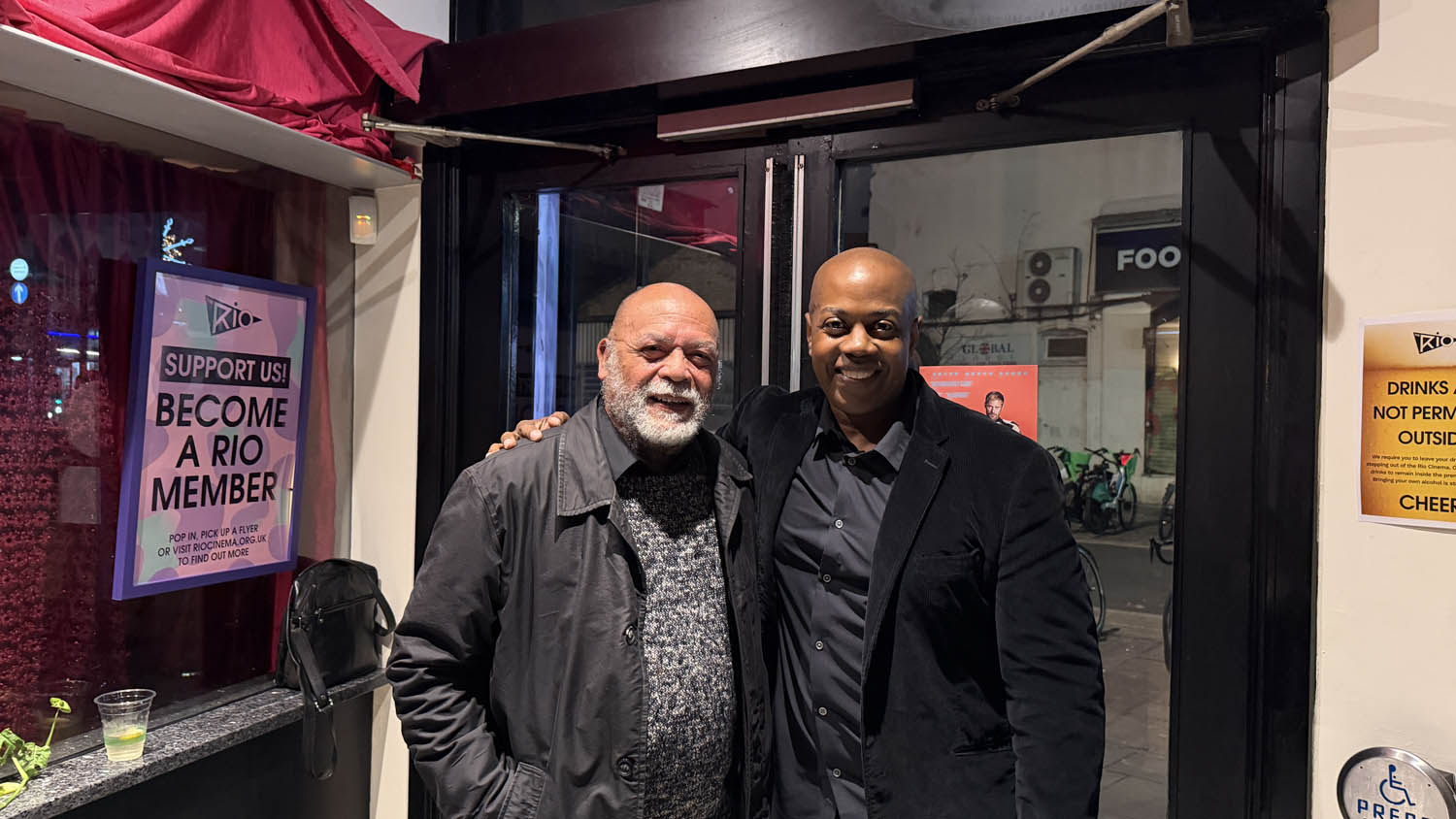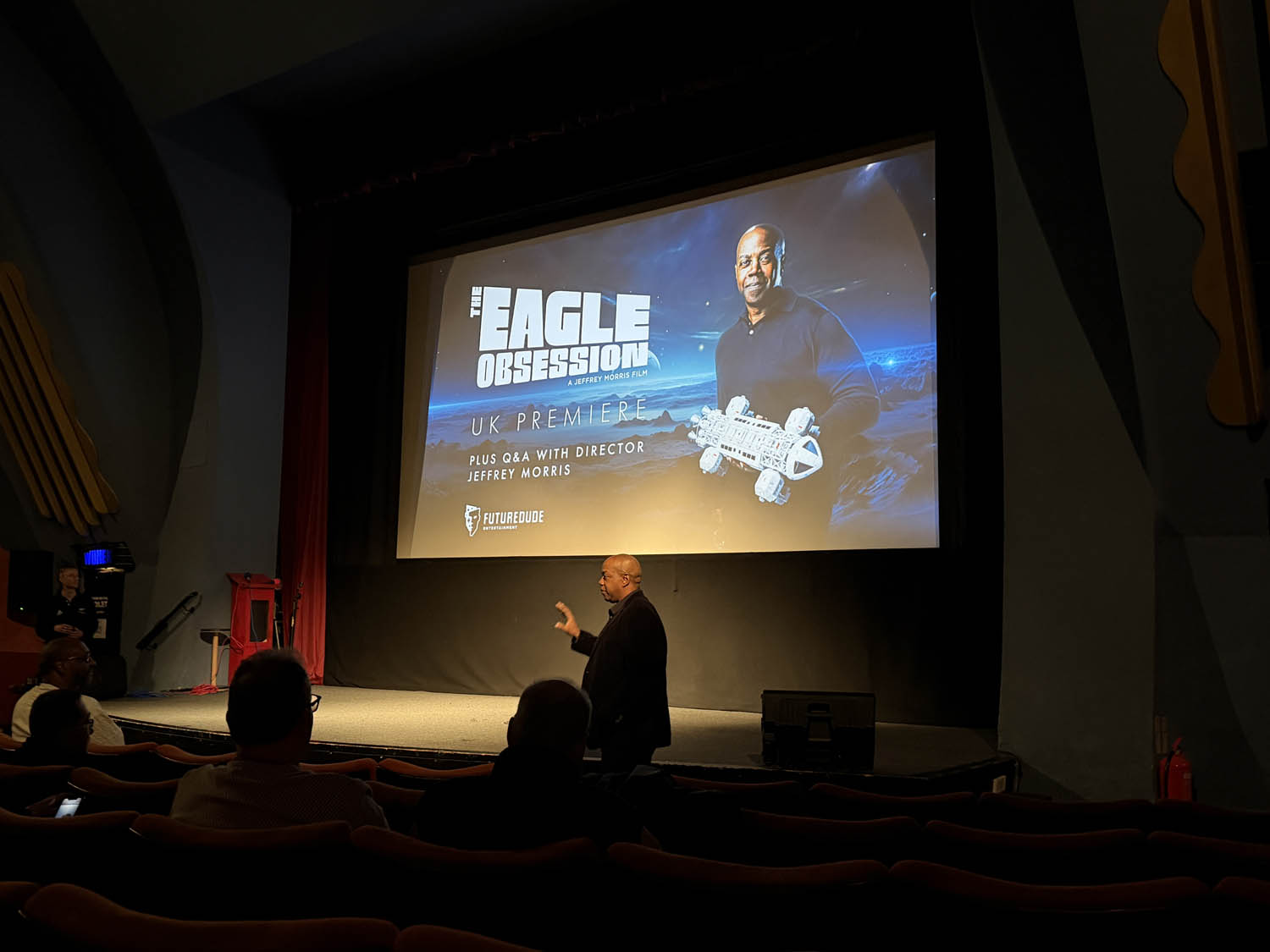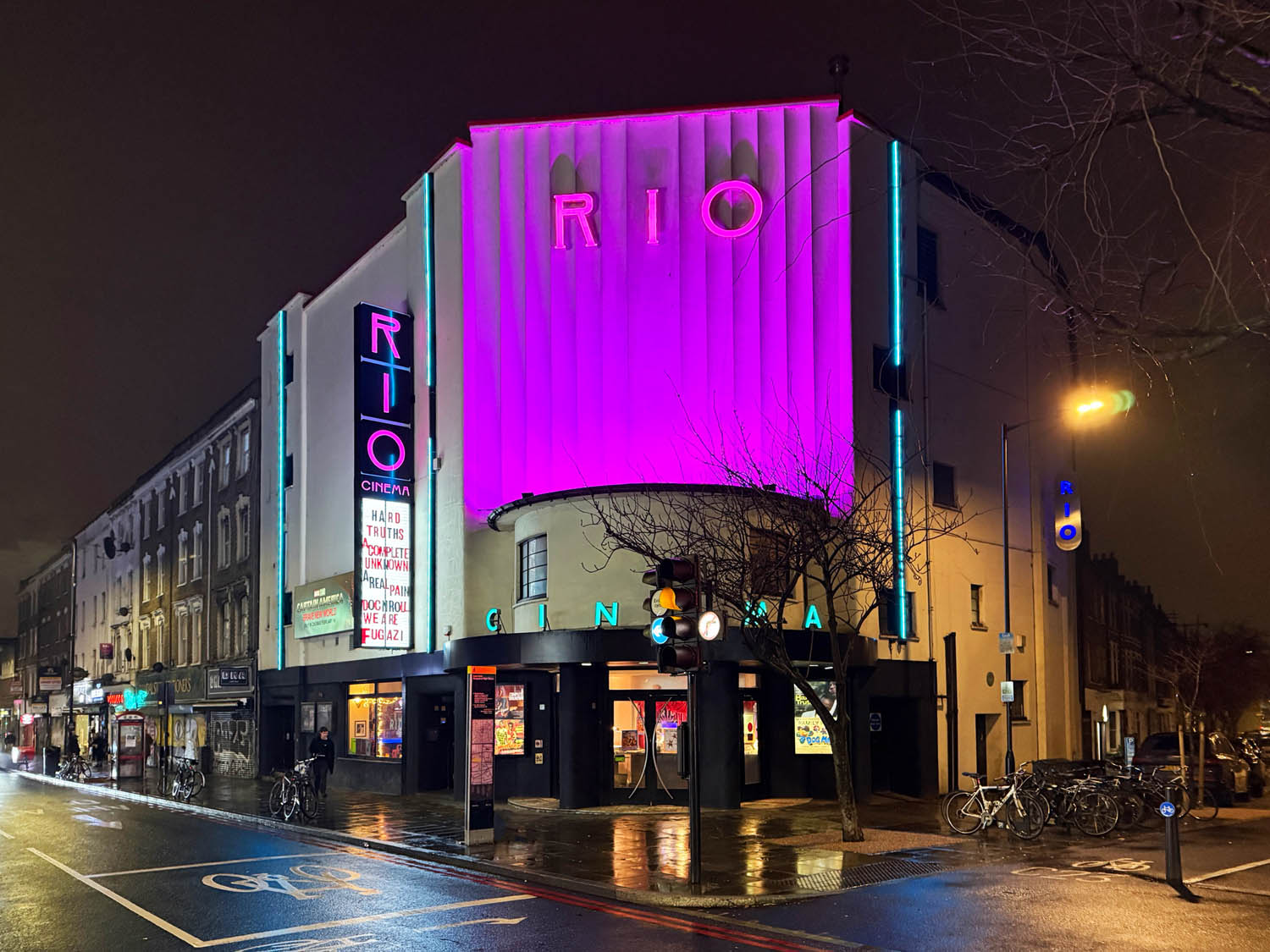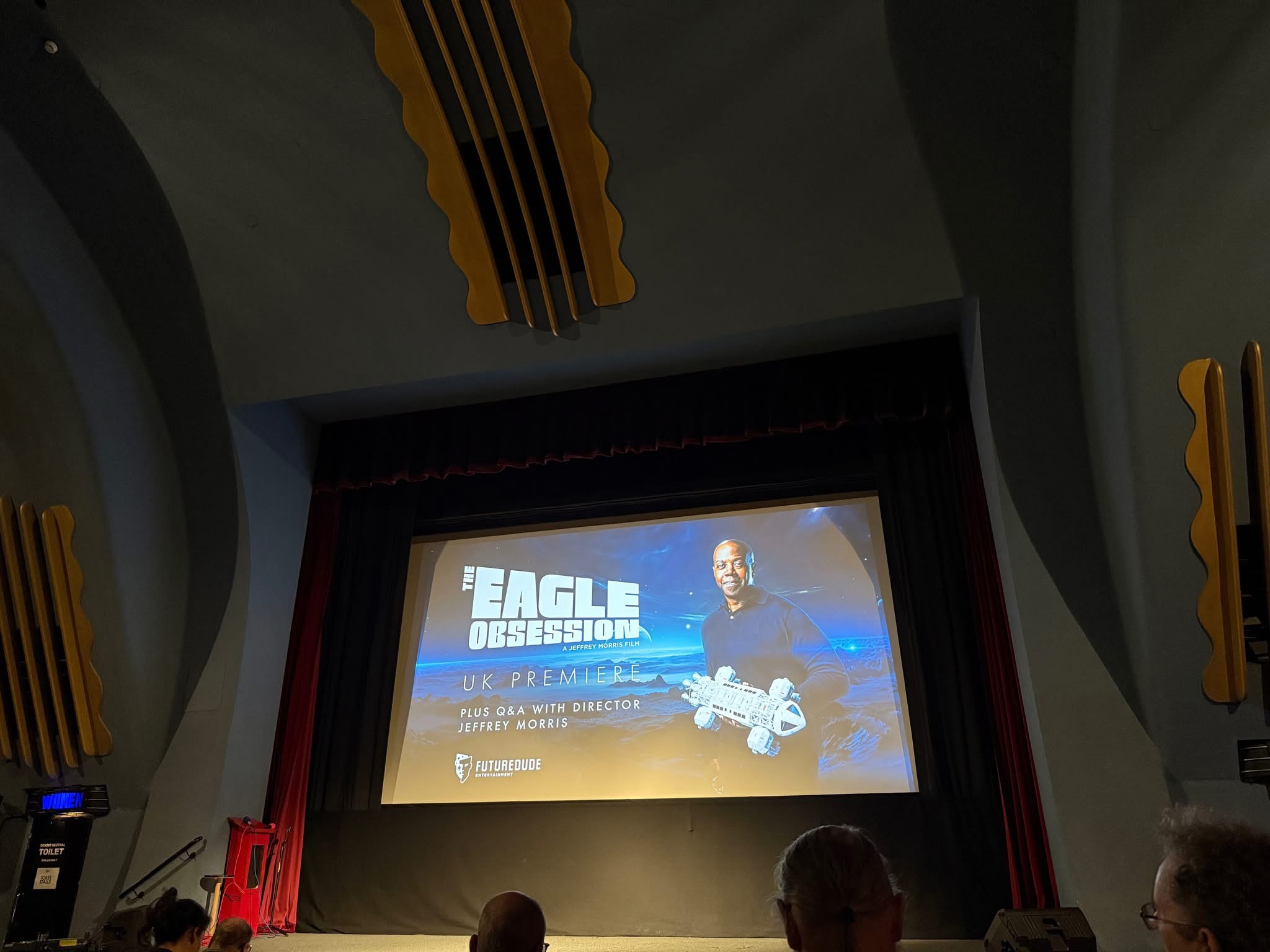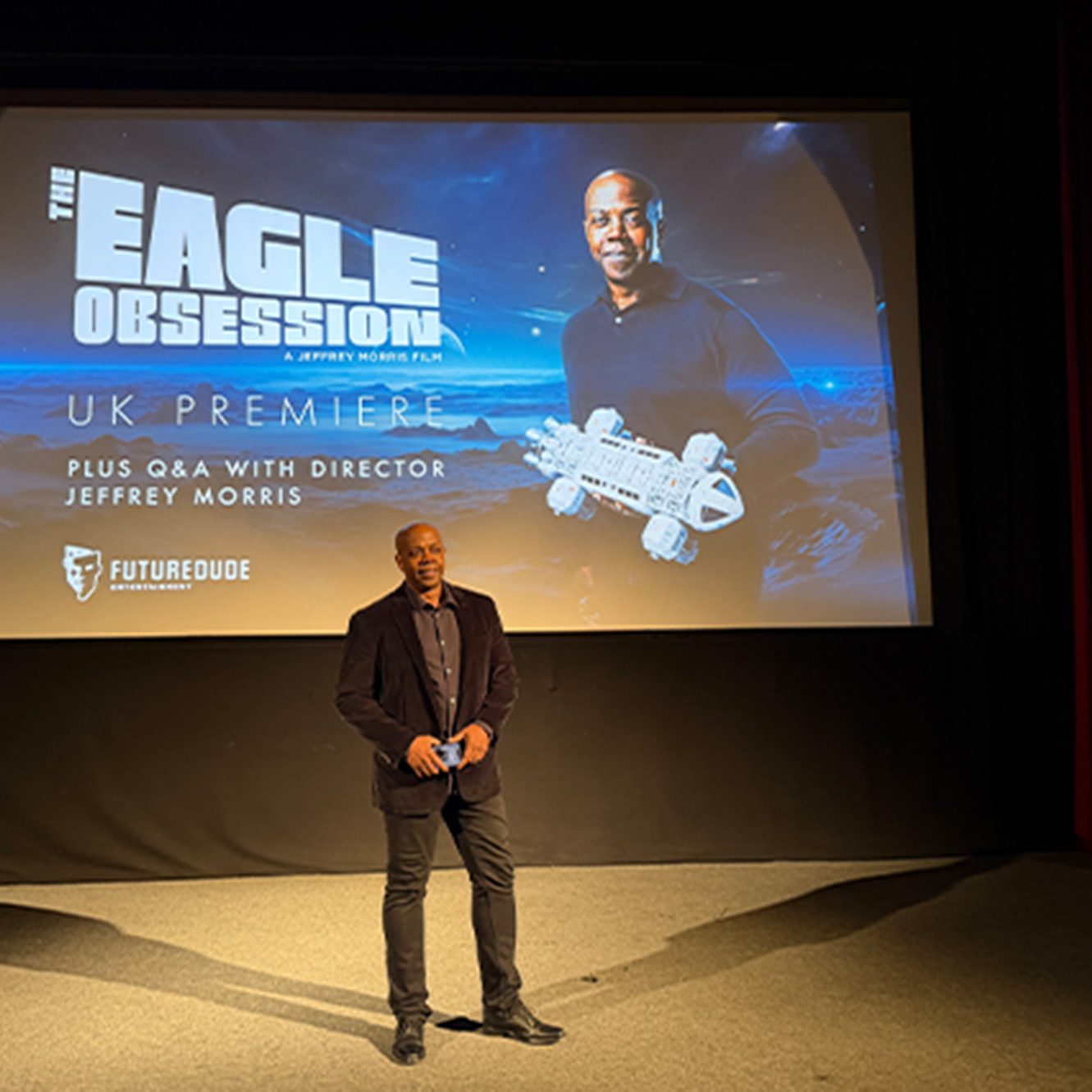
On Thursday, December 11, The Eagle Obsession had its UK premiere at the Rio Cinema in Dalston, London.
The screening marked a significant moment for the film, returning it to the country where Space: 1999 was originally produced. The event drew a large public audience, including longtime fans who have followed the series for decades, many of whom helped promote the screening through organizations such as Fanderson and other fan networks.
Interest in the premiere was further supported by a BBC Radio London interview with filmmaker Jeffrey Morris, hosted by Robert Elms, which introduced the film to a broader UK audience ahead of the screening.
The theater was filled to capacity, and the response was immediate and deeply engaged. Audience members connected not only with the cultural history explored in the film, but with its underlying message and personal journey. Following the screening, Morris conducted an extended Q&A, which evolved into a wide-ranging discussion about imagination, responsibility, and the future envisioned by earlier generations of science fiction.
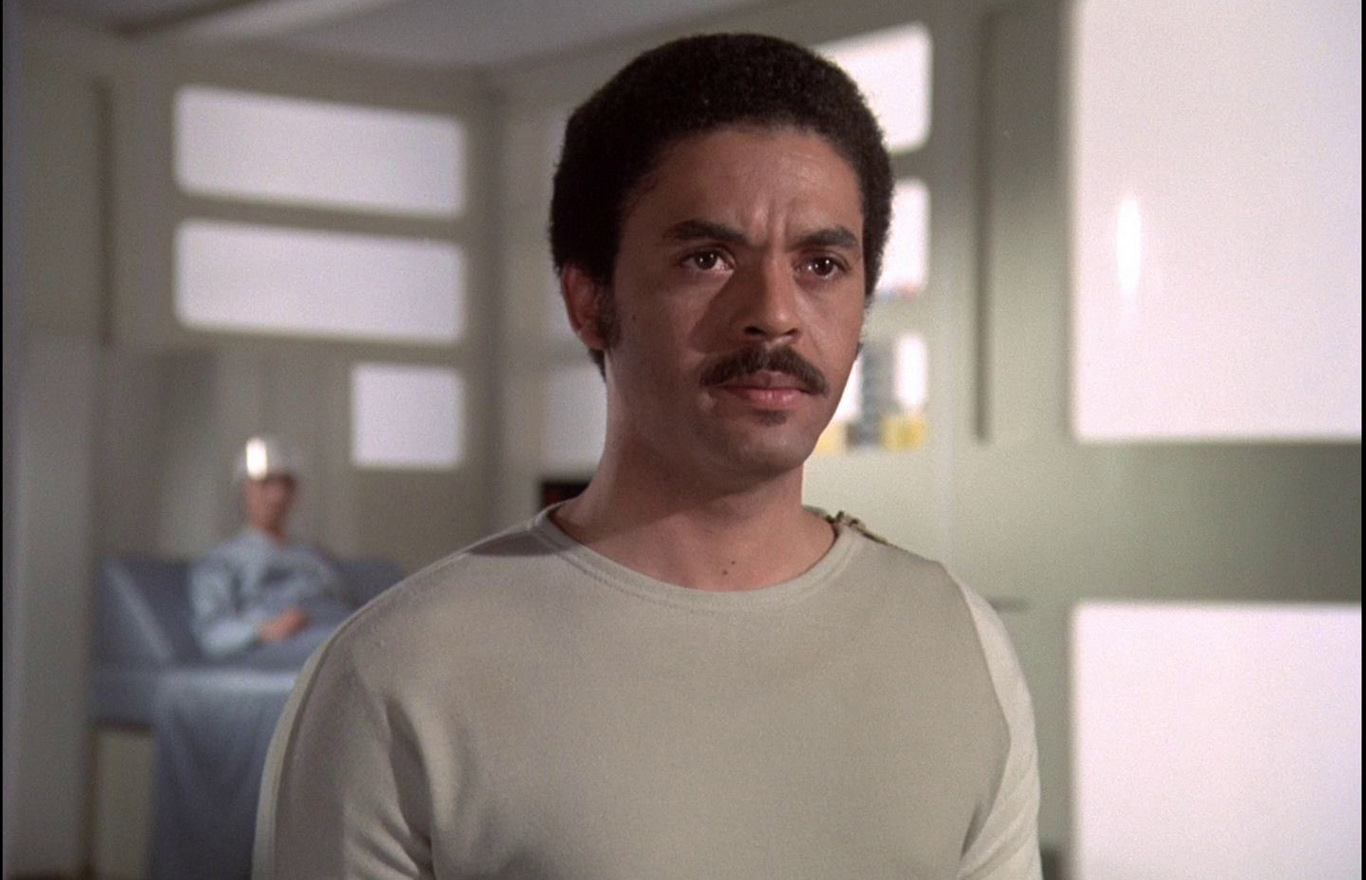
Also in attendance was actor Anton Phillips, who portrayed Dr. Bob Mathias, the deputy medical officer on Moonbase Alpha in Space: 1999. Phillips’ presence carried particular meaning for Morris. As a child watching the series in the mid-1970s, seeing a Black actor portrayed as a respected professional living and working in the future was formative. It conveyed something rarely shown at the time—that people of color would not only be present in the future, but thriving within it. That quiet but powerful representation became one of the many threads that shaped the film’s deeper themes.
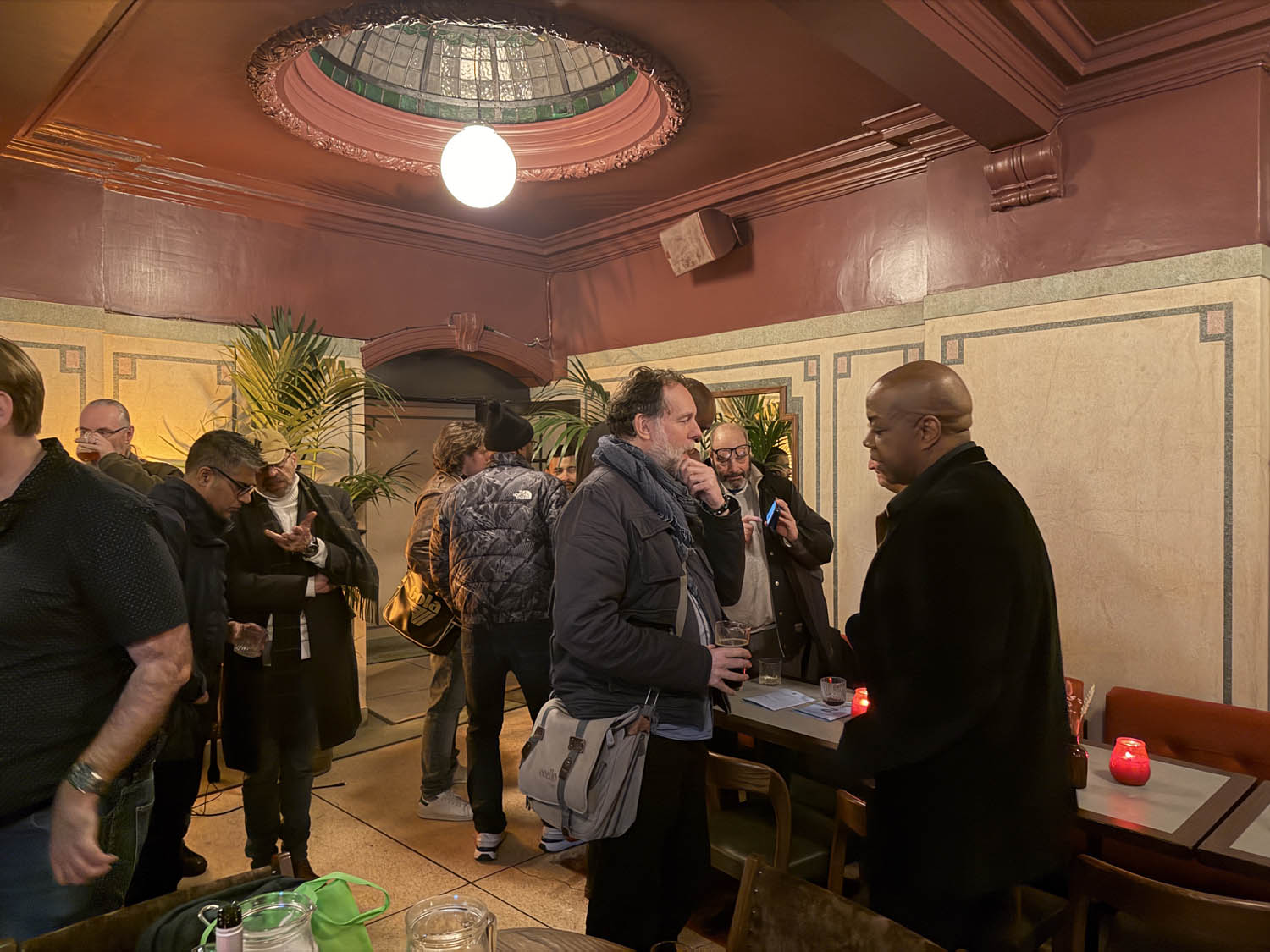
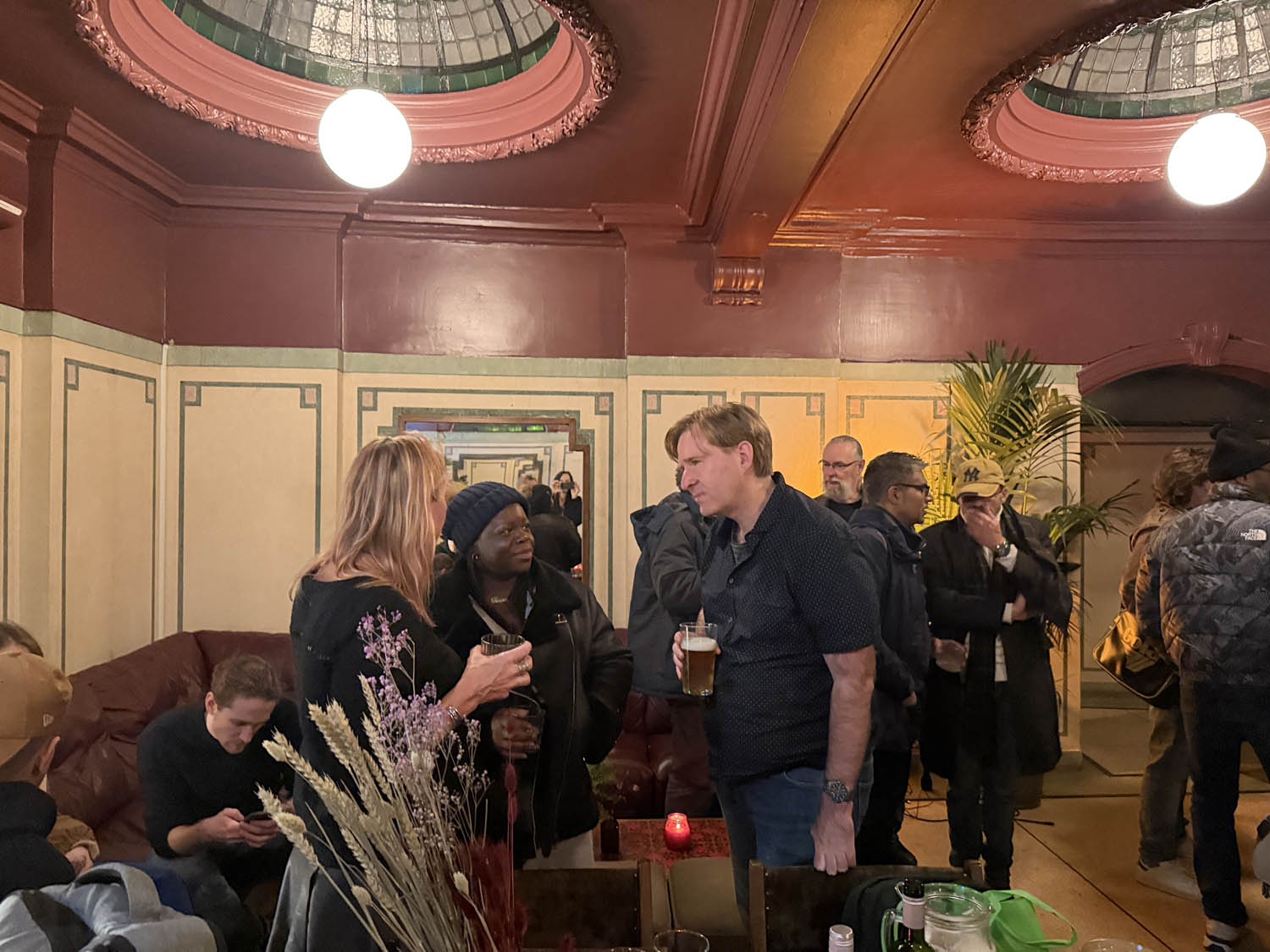
After the Q&A, attendees were invited to continue the conversation at a nearby pub, The Black Eel, where discussions carried late into the evening. For many present, the event felt communal rather than ceremonial—an opportunity to reflect together on what the film represented and why it resonated so strongly. One audience member summarized the sentiment shared by many in attendance:
“Last night, you showed us a glimpse of the future we should have had, not the dystopia that those who can’t see further than the next crooked deal have inflicted on us.”
In the days following the screening, interest from UK audiences has continued to grow. Discussions are now underway about organizing a higher-profile screening at the British Film Institute, prompted in large part by audience demand to share the film with a wider UK public.
The London premiere reinforced what has become increasingly clear as the film travels: The Eagle Obsession is not simply being watched—it is being reflected on, discussed, and carried forward by those who see it.